

Smoke does not respect national borders. Fires burning forests and peatlands in Sumatra and Kalimantan may begin within Indonesia’s territory, but the smoke travels with the wind, crossing the sea and affecting people in neighboring countries. In Malaysia and Singapore, the consequences extend beyond environmental damage. Polluted air disrupts daily life, threatens public health, interrupts education and renews questions about Indonesia’s ability to prevent and control forest and land fires.
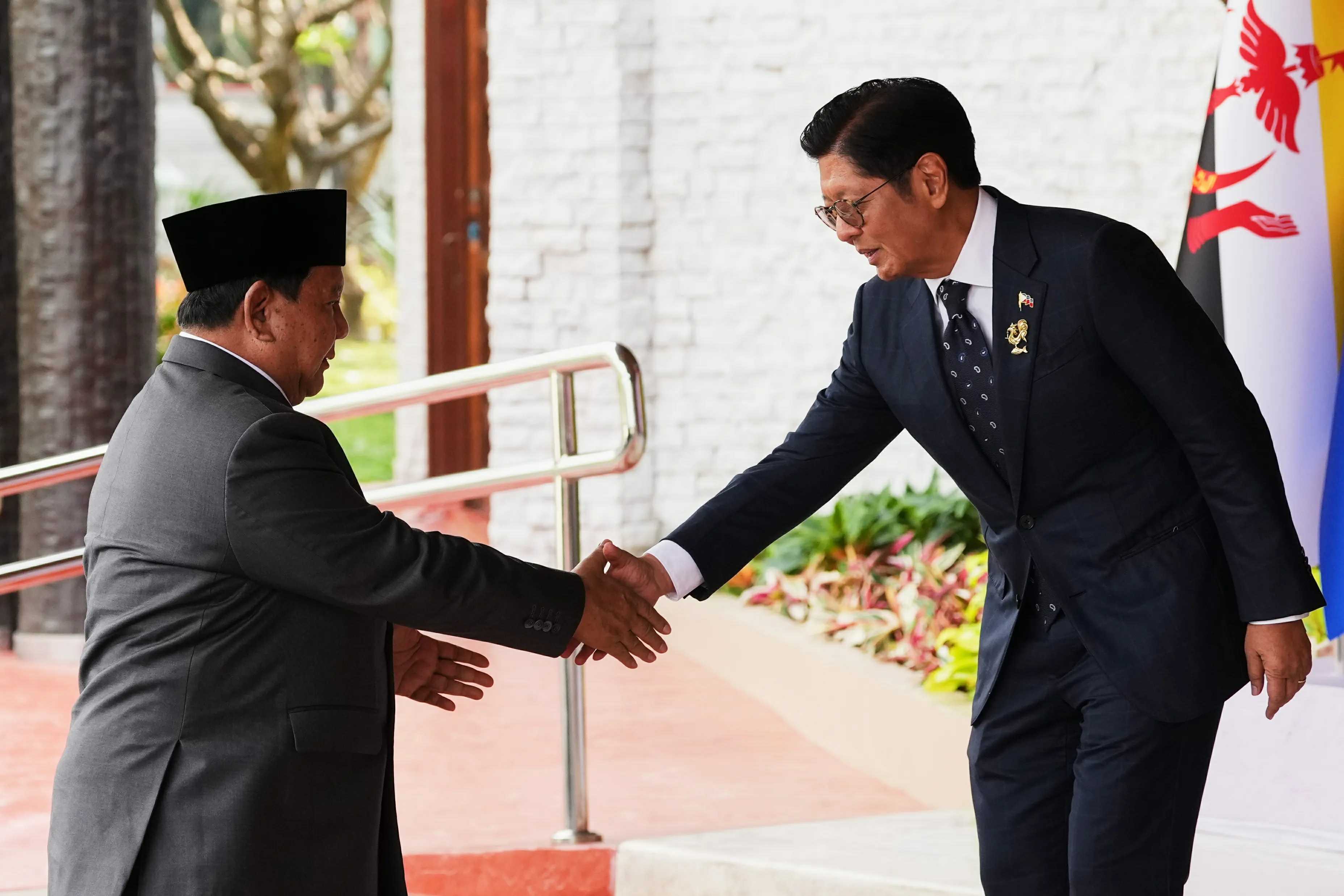
The recurring crisis returned to the ASEAN diplomatic agenda on Sunday. At the 49th ASEAN Summit in Manila, Philippines, President Prabowo Subianto apologized on behalf of the Indonesian government and people for the impact of the fires on communities in Malaysia and Singapore. He made the remarks during a plenary session chaired by Philippine President Ferdinand R. Marcos Jr. and attended by regional leaders, including Malaysian Prime Minister Anwar Ibrahim, Singaporean Prime Minister Lawrence Wong and Brunei’s Sultan Hassanal Bolkiah.
The apology carried diplomatic weight. Indonesia acknowledged that fires within its territory had caused harm beyond its borders. But it also exposed how a long-running source of regional tension remains unresolved. Each time fires spread, Indonesia’s relations with its neighbors are tested by a predictable consequence: smoke that crosses borders and cannot be contained by decisions made within a single country.
In a statement released Sunday evening, the Presidential Secretariat’s Press, Media and Information Bureau said Prabowo had assured ASEAN leaders that Indonesia was doing its utmost to control the fires. The government said it had deployed 71,000 forest firefighters. The operation was dangerous and had come at a heavy human cost. Sixteen personnel were reported killed, many others were injured and two helicopters went missing during the operation.
Those figures reflect the scale of the resources deployed. Behind them are workers confronting extreme heat, thick smoke, difficult terrain and serious risks to their lives. They are on the front lines of a crisis that cannot be resolved through firefighting alone. In peatlands, for example, fires can spread beneath the surface, remain difficult to detect and reignite even after visible flames have been extinguished. Fighting them requires sustained operations, coordination, equipment and adequate support.
But deploying thousands of personnel does not, by itself, demonstrate that prevention policies are working. The deployment of 71,000 firefighters may show the government’s commitment to responding to an emergency. It also raises a more difficult question: Why did the fires continue for nearly four months before conditions began to improve? If such a large force must be mobilized whenever the dry season arrives, the problem may lie not only in the ability to extinguish fires but also in how the state manages high-risk areas before they catch fire.
This year’s crisis began in July and intensified between August and October. Fires spread through forests and peatlands in Sumatra and Kalimantan as El Niño-related dry conditions increased the region’s vulnerability. Smoke reached neighboring countries, where the episode was described as one of the worst haze events since 2015. Conditions gradually improved in early November as rainfall increased.
The crisis illustrates the relationship between climate conditions and weaknesses in environmental governance. El Niño can prolong dry periods and increase the risk of fires, but it does not explain every cause. Weather conditions can make fires more likely to spread and harder to control. The sources of ignition, land-use practices, concession management and the government’s ability to enforce environmental rules are separate issues that require investigation.
That distinction matters. Forest and land fires should not automatically be treated as natural disasters beyond human control. Dry weather may create conditions that allow flames to spread, but it does not explain who started a fire, how it expanded or whether land managers complied with environmental regulations. When the entire crisis is attributed to El Niño, the responsibility of individuals and corporations can disappear from the discussion.
In Malaysia, the haze prompted authorities to take measures to protect the public. Air quality deteriorated to unhealthy and hazardous levels in several areas. Schools in Selangor, Johor and Sarawak were reportedly closed. The disruption showed how fires in Indonesia could affect everyday life in Malaysia. Children lost classroom time, families had to adjust their routines and local authorities were forced to respond to pollution originating outside their country’s borders.
Civil society groups in Malaysia also increased pressure on the Indonesian government. In early September, several organizations, including Greenpeace Malaysia, staged a protest outside the Indonesian Embassy in Kuala Lumpur. They called for greater transparency over hotspot data and concession ownership. Their demands went beyond technical information about the location of fires. They also sought to establish who controlled the land and who should be held accountable when fires occurred.
The call for transparency reflects a clear public interest. Without accessible and verifiable information, it is difficult to determine whether fires occurred on corporate concessions, community land or forest areas under government supervision. Hotspot data can help identify locations that require investigation, but it cannot establish responsibility on its own. Investigators need field inspections, reviews of land ownership and permits, and evidence showing how a fire started and who was responsible.
The issue also reached Malaysia’s Parliament, where lawmakers called for ASEAN to put pressure on corporations found responsible for land burning. The demand points to a shift in how neighboring countries view the haze crisis. It is no longer enough to treat the problem as an environmental disturbance requiring cooperation on firefighting. It is increasingly seen as a question of corporate accountability, particularly when business activities create damage that extends beyond national borders.
Singapore has taken a more direct approach through its legal system. In mid-October, the National Environment Agency (NEA), issued Preventive Measure Notices to 10 concession-holding companies in Sumatra and Kalimantan under the Transboundary Haze Pollution Act. The agency also sought clarification from several companies linked to Singapore.
The move showed that Singapore was not relying solely on regional diplomacy. It was using domestic law to seek information from companies and encourage preventive action. The Transboundary Haze Pollution Act gives Singapore a legal basis to pursue parties that meet the law’s criteria for liability, including in cases where activities contributing to pollution take place outside its territory.
In early November, Singapore announced plans to strengthen the law. The proposal suggests that the government considers its existing legal tools in need of further development. Singapore is seeking greater capacity to hold companies accountable when their activities contribute to cross-border pollution.
Indonesia faces a different set of responsibilities. It has direct authority over the territory where the fires occur, including the regulation of concessions, the issuance of permits, law enforcement and environmental restoration. Its performance therefore cannot be measured only by how effectively it extinguishes fires after they have spread. A more fundamental measure is whether the government can prevent burning in the first place and ensure that companies meet their obligations.
Prabowo’s apology in Manila acknowledged the harm suffered by neighboring countries. But diplomacy will have greater meaning only if it leads to changes that people can see and feel. For residents of Malaysia and Singapore who have to breathe polluted air, the number of firefighters deployed and the length of a firefighting operation do not restore air quality.

They need assurance that the same crisis will not keep recurring. Such assurance cannot come from diplomatic statements alone. It must be built through concession oversight, public access to information, investigations into the causes of fires, law enforcement and prevention policies that take effect before the dry season reaches its peak.
In Manila, Prabowo apologized on behalf of Indonesia. Outside the ASEAN meeting rooms, a harder question remains: Why must a country with decades of experience dealing with forest fires continue to apologize for a crisis whose consequences have been known for so long?
Corporate Accountability and Prevention
Behind the haze that has spread across parts of Southeast Asia lies a problem more complicated than the movement of flames or the direction of the wind. Forest and land fires are connected to how land is controlled, used, monitored and regulated. Some of the affected areas have significant economic value. That is why discussions about fires cannot stop at hotspot reports or estimates of burned land. They must also address companies holding concessions, their environmental obligations and the state’s ability to ensure that commercial activity does not leave the public bearing the costs of environmental destruction.
Prabowo told ASEAN leaders that the government had taken action against companies suspected of involvement in forest and land fires. He said Indonesia had revoked 17 concessions. Another 26 companies were under investigation, 11 had been charged and 23 others were on a list of companies expected to face charges. In total, he said, police were investigating 104 companies.
The figures suggest the scale of the enforcement effort claimed by the government. But each category has a different legal meaning. A company under investigation has not necessarily been found to have committed an offense. A company that has been charged is at a different stage of the legal process from one still being investigated. The revocation of a concession is an administrative measure and is not necessarily equivalent to a criminal conviction against those responsible.
These distinctions are not merely semantic. In a country governed by the rule of law, investigations, prosecutions and convictions must follow procedures that can withstand scrutiny. The government should not treat allegations as established wrongdoing. At the same time, legal proceedings should not become an excuse for allowing companies to escape accountability when evidence establishes violations.
Prabowo’s statement that 104 companies were under investigation needs to be followed by greater transparency about their identities, concession locations, suspected violations and the progress of each case, to the extent that disclosure does not compromise an investigation. Without such information, the public is left with an account of the scale of enforcement but little evidence by which to assess its results.
The revocation of 17 concessions also requires further explanation. The government should clarify whether the decisions were directly linked to findings of fires, violations of environmental obligations or other administrative grounds. If the revocations were penalties against companies found to have violated the law, the public should know the legal basis for those decisions and what will happen to the affected areas. Revoking a permit does not necessarily resolve environmental problems if the land is left without proper management.
Concessions have long been central to Indonesia’s management of natural resources. Business permits grant companies the right to manage specific areas under established rules. But those rights come with obligations. Concession holders must ensure that their operations comply with environmental regulations, including requirements for fire prevention and control.
These obligations are particularly important in peatland areas. Peat soils contain large amounts of organic material and can suffer severe damage when drained or burned. Fires that enter peat layers can persist underground and produce smoke for extended periods. Extinguishing visible flames is not enough. Water management, canal systems, moisture monitoring and surveillance of high-risk areas are all essential to prevention.
Under these conditions, oversight cannot depend solely on patrols after hotspots have appeared. The government must ensure that land managers have early-detection systems, firefighting equipment, water supplies, trained personnel and emergency response procedures. Compliance with these requirements should be inspected regularly, not only after fires have attracted public attention and alarmed neighboring countries.
Another problem is the lack of transparency over concession ownership and control. The demands made by Greenpeace Malaysia and other civil society groups for hotspot and concession data show that this information has cross-border significance. When smoke reaches Malaysia, people there want to know not only where it came from but also who controls the land where the fires occurred and whether the companies involved fulfilled their obligations.
Public access to data can help connect fire locations with information about permits and land management. But a hotspot’s proximity to a concession does not prove that the concession holder started the fire. Hotspots indicate possible sources of heat, not automatic evidence of wrongdoing. Investigations must consider field conditions, fire history, land boundaries, human activity and other relevant evidence.
Without careful investigations, enforcement can produce accusations that fail to stand up in court. But when governments withhold information that should be publicly available, companies that are genuinely responsible may find it easier to avoid public scrutiny.
Singapore has demonstrated how corporate accountability can be pursued through legal measures that reach beyond national territory. The NEA’s decision to issue Preventive Measure Notices to 10 concession-holding companies in Sumatra and Kalimantan under the Transboundary Haze Pollution Act is significant. Through the notices, the agency sought explanations from the companies and called for appropriate preventive measures.
Singapore’s approach has broader implications for regional relations. Haze management has often depended on agreements between governments and political commitments to cooperate. But cooperation does not always translate into direct accountability for companies. By using the Transboundary Haze Pollution Act, Singapore is seeking to strengthen its ability to address pollution originating outside its borders.
The plan announced in early November to strengthen the law suggests that Singapore believes its existing legal framework needs further improvement. For Indonesia, the development is a reminder that neighboring countries may not always rely on diplomacy to address the effects of fires. When pollution recurs, they have an interest in using domestic law to protect their populations.
This places greater responsibility on Indonesia. As the country where the fires occur, Indonesia has the primary authority to monitor corporate activities and prosecute violations within its territory. Effective enforcement would reduce the need for neighboring countries to pursue companies operating in Indonesia through their own legal systems.
Bilateral efforts are already underway. Singapore’s Foreign Minister Vivian Balakrishnan visited Jakarta in late October. During a meeting on 27 October, Indonesia and Singapore agreed to establish a Joint Task Force on Strengthening Business Responsibility. The task force is intended to facilitate the exchange of data and evidence to pursue companies found responsible for land burning.

The initiative recognizes that the haze crisis requires more than coordination on firefighting. The two governments are seeking a mechanism to connect information, corporate oversight and law enforcement. Its effectiveness will depend on the quality of the data exchanged, a clear division of responsibilities and each government’s willingness to act on the findings.
Bilateral cooperation, however, cannot replace Indonesia’s own responsibilities. Sharing evidence with Singapore may help identify companies and strengthen investigations, but monitoring concessions and enforcing the law within Indonesia remain the Indonesian government’s duty. Issues within its jurisdiction should not require a warning from another country or the threat of legal action before receiving serious attention.
Prabowo has also said Indonesia needs to change its approach to forest and land fires. He argued that the government has focused too heavily on extinguishing fires and responding to emergencies. In the future, he said, the government wants to shift toward systematic prevention. He also referred to plans for a new agency and several programs intended to strengthen fire prevention.
The proposal acknowledges that firefighting alone is insufficient. But changing the approach requires more than establishing another institution. Indonesia already has agencies and policy frameworks dealing with forestry, environmental protection, disaster management and business oversight. The central question is not simply whether a new agency is needed, but which functions are failing and how a new institution would address those weaknesses.
Creating an agency without clearly defining its authority could make bureaucratic overlap worse. A new institution would need a clear mandate, sufficient funding, technical expertise, access to data and the authority to coordinate action across government sectors. Without those elements, the result could be an administrative restructuring with little practical improvement.
Prevention must also begin well before the dry season. The government needs reliable maps of fire-prone areas, continuous monitoring systems and procedures for responding to early warning signs. In peatlands, water management is essential. Concession holders must also be held responsible for meeting their obligations to prevent fires and maintain adequate firefighting capacity on the land they manage.
Communities living near forests and peatlands should not be treated merely as victims or targets of public awareness campaigns. Their knowledge of local conditions and changes in nearby activities can make them important partners in early detection. But community participation must come with practical support, including access to information, protection and reporting channels that lead to meaningful action.
Local livelihoods must also be taken into account. Prevention policies based solely on prohibitions, without addressing people’s economic needs, risk creating conflict while leaving underlying problems unresolved. The government must ensure that land management policies provide viable alternatives while enforcing the law against those who use fire to clear or manage land.
Companies, meanwhile, should not be allowed to blame extreme weather or the actions of third parties without providing evidence that can be examined. Concession holders have a duty to manage their land responsibly. When fires occur, they should disclose relevant information and cooperate with investigations in accordance with the law.
This year’s haze crisis should be an opportunity to test whether the government can break a cycle that has repeated itself for years. Prabowo’s apology in Manila opened a diplomatic path toward improving relations with Malaysia and Singapore. The deployment of tens of thousands of personnel demonstrated the scale of the firefighting operation. The revocation of concessions and investigations into companies showed that the government says it is expanding enforcement.
But these are steps in a process, not proof of success. The real test will be fewer fires, greater corporate compliance, the restoration of damaged land and better protection for people exposed to smoke. If each dry season brings another crisis, the scale of the firefighting operation cannot continue to serve as evidence of effective governance.
ASEAN also has an interest in ensuring that regional cooperation does not end with high-level meetings. The haze crisis requires information sharing, coordinated responses and a commitment to corporate accountability. Member states need mechanisms that turn environmental data into concrete action rather than leaving it as material for diplomatic discussions.
Ultimately, leadership in a forest fire crisis is not measured only by a president’s willingness to apologize before neighboring countries. It is also measured by what happens after the meeting: whether companies that violate the law are held accountable, whether fire-prone areas are properly monitored and whether communities are protected before the smoke returns.
The haze may disappear when the rain comes and the wind changes direction. But the conditions that cause it do not disappear with the smoke. As long as land oversight remains weak, enforcement lacks transparency and prevention is not a priority, apologies at ASEAN meetings risk becoming part of the same recurring cycle.
Indonesia has decades of experience dealing with forest fires. What remains to be demonstrated is whether the country can learn from that experience. A government’s responsibility is not simply to extinguish fires after they start. It is to ensure that its own people and those in neighboring countries are not forced to suffer the same consequences again.
Leave a Reply