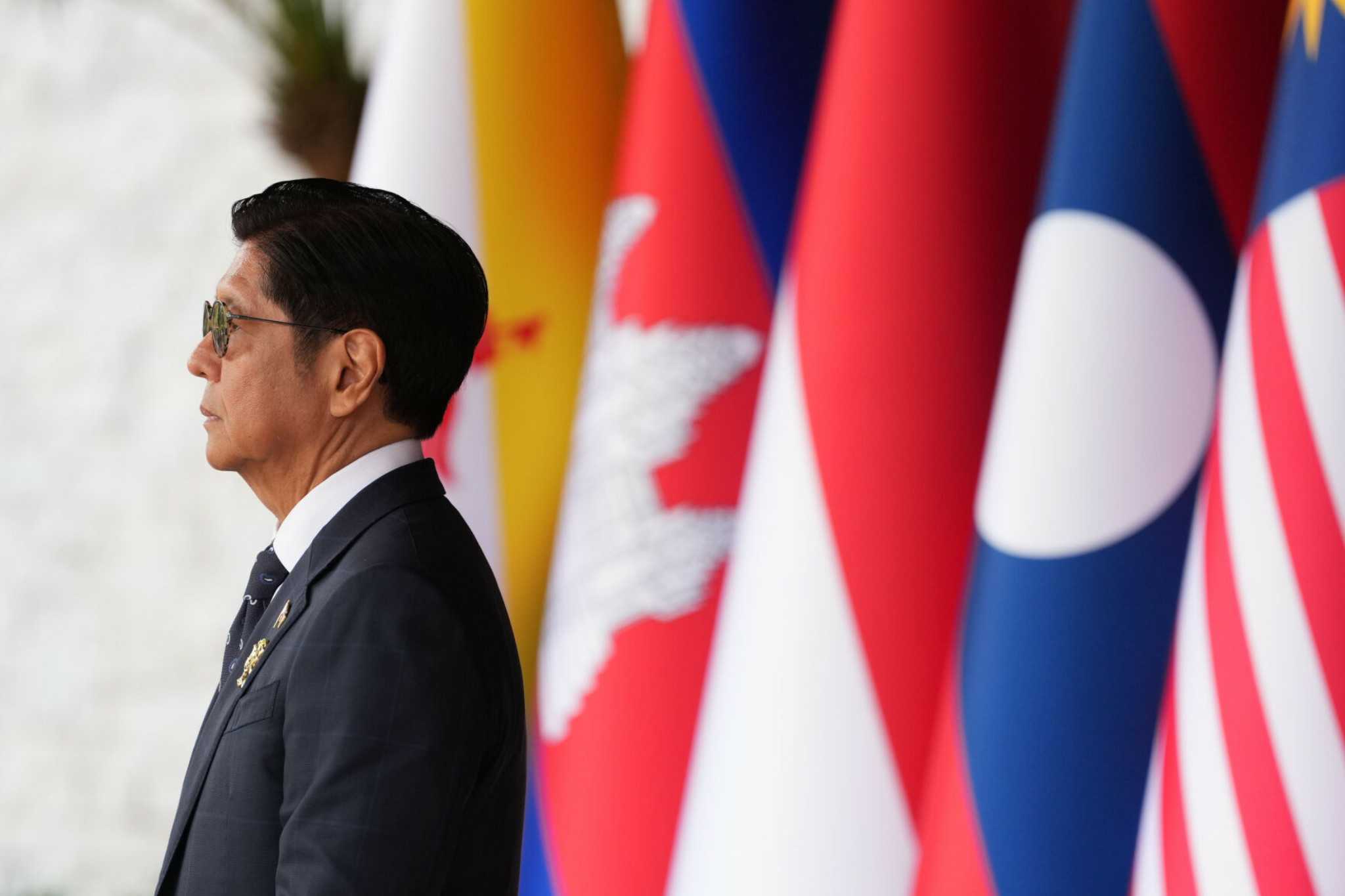


There is an unwritten rule in ASEAN diplomacy: a government can remain a member of the organization without its leaders necessarily being welcome at the negotiating table. Myanmar has occupied that uncertain position since the military seized power in February 2021. Five years after the coup that ousted the elected government of Aung San Suu Kyi, the country remains an ASEAN member, but its military leaders are still barred from attending the bloc’s summits. In Manila on Sunday, Southeast Asian leaders reaffirmed that the restrictions would remain in place. The decision was more than a matter of protocol. It acknowledged that Myanmar’s crisis remains unresolved and that the government installed through a coup has yet to meet the political conditions set by its regional neighbors.
The leaders’ latest statement delivered a sharper rebuke of conditions in Myanmar. They expressed deep concern over the lack of progress in implementing the Five-Point Consensus, a peace plan agreed upon in April 2021, just months after the military takeover. They also urged all parties, particularly the armed forces, security personnel and armed groups, to reduce violence, stop attacks on civilians and civilian infrastructure, and rebuild trust. The language reflected a growing recognition that Myanmar’s crisis can no longer be discussed simply as a dispute between the government and opposition groups. Violence has become a defining feature of civilian life, while armed actors continue to narrow the space for a political settlement.
The Five-Point Consensus was designed as a diplomatic path out of the crisis that followed the coup. It called for an immediate end to violence, dialogue among the parties and a role for an ASEAN special envoy in facilitating the process. But an agreement that appeared straightforward on paper never developed into an effective peace mechanism. The military continued its armed operations, while resistance to junta rule evolved into a wider conflict across the country. Efforts to bring the opposing sides into dialogue produced little meaningful progress. The five points, initially intended as the foundation for a settlement, have instead become a recurring measure of ASEAN’s failure to move the crisis toward peace.
The February 2021 coup did more than replace one government with another. The military takeover ended a political process led by an elected administration and triggered mass demonstrations demanding the restoration of democracy. Security forces responded with violence. As opportunities for peaceful protest narrowed, resistance expanded and became increasingly armed. What began as opposition to the coup developed into a civil war involving the military and multiple resistance groups. The conflict has made a political settlement far more difficult. No diplomatic decision can easily end a war in which the authorities rely on armed force to retain power and resistance has spread across large parts of the country.
The humanitarian toll is reflected in figures compiled by the Assistance Association for Political Prisoners, an independent organization that documents arrests and deaths linked to the conflict. As of Friday, the group had recorded more than 8,600 deaths and 32,406 arrests by Myanmar’s security forces. The figures illustrate the scale of repression since the coup, although documentation in an armed conflict cannot capture every incident on the ground. AAPP’s records should also be understood within their stated scope: the figures concern deaths and arrests attributed to security forces, not a complete accounting of casualties among all parties to the war. Even with those limitations, the numbers make clear that Myanmar’s crisis cannot be treated as a temporary political disturbance.
Warnings from United Nations human rights mechanisms add to the gravity of the situation. Last month, a U.N. human rights investigator said the military-backed authorities were deliberately attacking civilians to terrorize them and force them into submission. The statement amounted to a serious accusation about how the military exercises power. It also places ASEAN’s demand for an end to attacks on civilians in a broader context. The violence is not simply the result of clashes spiraling out of control on the battlefield. It also involves allegations that force is being used against the population to maintain political dominance. When civilians are targeted, calls for de-escalation mean little unless they lead to a real change in the conduct of armed actors.
In Manila, ASEAN specifically called on the armed forces, security personnel and armed groups to stop attacks on civilians and civilian infrastructure. The reference to all parties reflects the organization’s diplomatic caution. ASEAN did not assign responsibility for ending the violence to only one side. But its specific mention of the military and security forces cannot be separated from the fact that they are part of the power structure that seized the government in 2021. Those controlling state institutions carry responsibilities different from those of groups opposing them. Naming all parties should not obscure the distinction between those holding power and those fighting against them.
Restrictions on Myanmar’s leaders attending ASEAN summits remain one of the bloc’s main instruments of political pressure. The leaders said Myanmar’s political and foreign ministers would remain excluded from high-level meetings until there was meaningful progress in implementing the Five-Point Consensus. While the restrictions remain in force, Myanmar can be represented by career diplomats at a lower level. The country’s membership has not been revoked, but its highest political officials are still denied full representation at the organization’s main gatherings. ASEAN is maintaining institutional ties with Myanmar while withholding full political recognition from its military government in the bloc’s central forums.
The policy reflects a difficult compromise. ASEAN was built around sovereignty, consensus and noninterference. Those principles have made the organization cautious about judging the domestic politics of its members. But Myanmar’s crisis has put them under pressure. If ASEAN adheres only to the principle of staying out of internal affairs, it risks allowing violence to continue without a meaningful regional response. If it takes a much tougher position, its members must confront the limits of the organization’s authority over a government whose country remains part of the bloc.
The Five-Point Consensus was an attempt to navigate those competing interests. ASEAN did not establish a rival government, expel Myanmar or impose regime change. Instead, its leaders set conditions for the military government to regain full political representation. Yet years later, the gradual approach has failed to stop the violence. The firmer language adopted in Manila suggests that ASEAN’s diplomatic patience has limits. It does not, however, answer the harder question: What can the organization do when the party under pressure shows little willingness to honor the agreement?
Myanmar’s crisis is therefore about much more than whether a leader is allowed to attend a summit. The restrictions carry symbolic and diplomatic weight, but they do not change conditions on the battlefield. The junta still controls state institutions and relies on military force to maintain its rule. Meanwhile, people across Myanmar continue to face the consequences of war, arrests and attacks on civilian areas. ASEAN can deny junta leaders a political platform, but that decision does not automatically protect people living under the threat of violence. The gap between diplomatic pressure and the ability to stop a war is becoming increasingly difficult to ignore.
Legitimacy Without Peace
The challenge for ASEAN extends beyond the failure of the Five-Point Consensus. In recent months, Myanmar’s military leader has sought to rebuild ties with Asian countries and the wider international community through diplomatic visits. Min Aung Hlaing, who led the military takeover that ousted Aung San Suu Kyi’s government in February 2021 while serving as commander in chief, was sworn in as president in April. The transition followed an election held in stages in December and January. Critics have described the vote as a political exercise designed to consolidate military control while creating the appearance of a return to civilian government. A change in title, from military ruler to president, has therefore done little to resolve the legitimacy problem created by the coup.
Elections can provide a government with a public mandate, but the act of voting alone does not establish that a political process is free or competitive. In Myanmar, the election took place while civil war continued and military control remained intact. Critics have raised a fundamental question: Did the vote create an opening for political change, or did it simply change the appearance of government without changing who holds power? Min Aung Hlaing’s inauguration as president formalized a change in office. It did not, by itself, demonstrate that the source of power established through the coup had changed.

The distinction between holding office and possessing legitimacy matters when assessing the junta’s diplomatic efforts. Since his inauguration, Min Aung Hlaing has visited five ASEAN member states, including Thailand, Malaysia and Vietnam. The trips are part of an effort to restore relations with Asian governments and the international community. The military-backed government needs foreign ties to reduce its isolation and secure broader acceptance. In international politics, meetings with foreign officials can produce photographs, joint statements and the appearance of normal diplomatic relations. But receiving a visiting leader does not automatically amount to recognizing the legitimacy of his government or endorsing the way he came to power.
ASEAN has not barred member states from receiving Min Aung Hlaing. Nor have regional leaders called for an end to bilateral relations with Myanmar. But they have reaffirmed that the Five-Point Consensus remains the bloc’s central framework for addressing the country’s political crisis. This reflects a distinction between relations among states and political representation within the organization. Member states can maintain communication with Myanmar’s government, but those contacts should not be mistaken for the restoration of its full political standing in ASEAN. Diplomatic channels remain open, while the path to regional recognition is still tied to progress on the peace agreement.
That distinction is central to ASEAN’s strategy. Ending all diplomatic relations could leave the organization without channels of communication with the authorities that still control state institutions. But treating every bilateral visit as a sign of normalization would undermine the restrictions on junta leaders attending high-level meetings. ASEAN is trying to preserve two objectives: maintaining contact while applying political pressure against the idea that the crisis has been resolved. The approach may appear contradictory, but it reflects the constraints of an organization whose members have different political interests and approaches.
Another decision showing how Myanmar’s crisis has affected ASEAN was the transfer of the bloc’s rotating chairmanship. Myanmar was supposed to hold the chair this year and host a series of regional meetings. But because of the continuing internal conflict, responsibility was transferred to the Philippines. This was more than a scheduling adjustment. The ASEAN chairmanship gives a member state the opportunity to lead the organization’s agenda, organize meetings and represent the bloc in dealings with external partners. Myanmar’s inability to assume that role has allowed its domestic crisis to reshape the distribution of responsibilities across the region.
The Philippines is now not only hosting the annual meetings but also carrying diplomatic responsibilities related to Myanmar. Philippine Foreign Minister Theresa Lazaro, who serves as ASEAN’s special envoy to Myanmar, said bombings and displacement were continuing. She said ASEAN would give Myanmar room to address its problems gradually while continuing to monitor developments. Her remarks reflected an approach that promises no quick resolution. But the language of gradual progress carries a risk: Without clear deadlines and measurable standards, a step-by-step process can become an extended period of waiting while conditions on the ground continue to deteriorate.
The special envoy’s challenge is not simply to bring the parties to the conflict together. The envoy must work in a political environment where the parties do not have equal positions and may not recognize one another as legitimate negotiating partners. The Five-Point Consensus calls for an end to violence and dialogue facilitated by ASEAN, but its implementation depends on the willingness of the parties in Myanmar to participate. If the military refuses to halt its operations and make room for meaningful dialogue, the envoy’s diplomatic mandate will face limits that meetings and statements alone cannot overcome. ASEAN can monitor developments, but monitoring is not the same as having the power to compel change.
The three-day summit in Manila took place as Myanmar’s conflict remained among the issues on the leaders’ agenda. A draft post-summit communiqué seen by The Yogya Post identified the conflict, including Myanmar’s civil war, as one of the issues to be discussed during a series of meetings with world leaders, including U.S. President Donald Trump. The involvement of international partners shows that Myanmar’s crisis is no longer solely an internal ASEAN concern. It has consequences beyond the country’s borders, affecting diplomacy, humanitarian conditions and regional security. But attention from major powers does not guarantee that external pressure will produce a settlement acceptable to the parties in Myanmar.
Against this backdrop, ASEAN’s statement that Myanmar could eventually regain full political representation is both important and uncertain. The leaders said restoration could be considered gradually, depending on sustained and concrete progress in implementing the Five-Point Consensus. They did not specify in detail how such progress would be measured. The lack of clarity leaves room for diplomacy, but it also raises questions about accountability. Without standards that can be independently assessed, the term “progress” can mean different things to ASEAN members, Myanmar’s government and those demanding an end to the violence.
Progress should not be measured only by changes in official titles, the holding of elections or an increase in diplomatic visits. Those developments may indicate political activity, but they do not answer whether civilians are safer, political arrests have stopped or the parties are moving toward genuine dialogue. If full representation is restored based only on formal changes to the government structure, ASEAN risks rewarding a process that does not address the roots of the conflict. On the other hand, if the conditions are never explained publicly, the restrictions could lose their value as a consistent instrument of political pressure.
ASEAN must also confront the fact that the Five-Point Consensus has little power to compel compliance. The agreement carries legitimacy because the leaders of member states endorsed it, but its success depends on cooperation from the parties in Myanmar. The organization has no direct authority to order the military to stop its operations or force armed groups to enter negotiations. Reliance on consent is part of how ASEAN operates, but it becomes a weakness when dealing with a government that does not respond to diplomatic pressure. When an agreement is ignored, the organization can issue statements, maintain restrictions and appoint a special envoy. These measures remain important, but they have not been enough to change the balance of power inside Myanmar.
The decision to maintain restrictions on Myanmar’s leaders should therefore not be seen as proof that ASEAN has succeeded in managing the crisis. It is better understood as an acknowledgment that the conditions behind the restrictions have not changed. As long as violence continues and the Five-Point Consensus remains unfulfilled, restoring the junta leader’s place at the main table would send a message that the bloc is willing to normalize relations without a settlement. But maintaining the restrictions alone is not enough. ASEAN must show that gradual diplomacy has measurable objectives rather than serving simply as a way to manage a crisis without resolving it.
Ultimately, the question facing ASEAN is not merely when Myanmar can send its political leaders back to high-level meetings. The deeper issue is what regional membership means when a country remains engulfed in violence and its government fails to honor an agreement it accepted. Membership should not provide unconditional political protection, but diplomatic restrictions cannot serve as a substitute for protecting civilians. As long as the war continues, the distance between leaders’ statements and the daily lives of Myanmar’s people will remain the clearest measure of ASEAN’s limitations.
In Manila, the leaders again said that the path toward full political representation must be based on concrete progress under the peace plan. It was an important message to the junta and to ASEAN’s own members. But it will matter only if the bloc measures progress by changes people can experience, not by developments that can be displayed in diplomatic meetings. Myanmar retains its seat as a member of the organization, but its leaders remain outside the main table. As long as violence remains a means of holding on to power, that restriction will serve as a reminder that diplomatic recognition and political legitimacy are not the same thing.
Leave a Reply