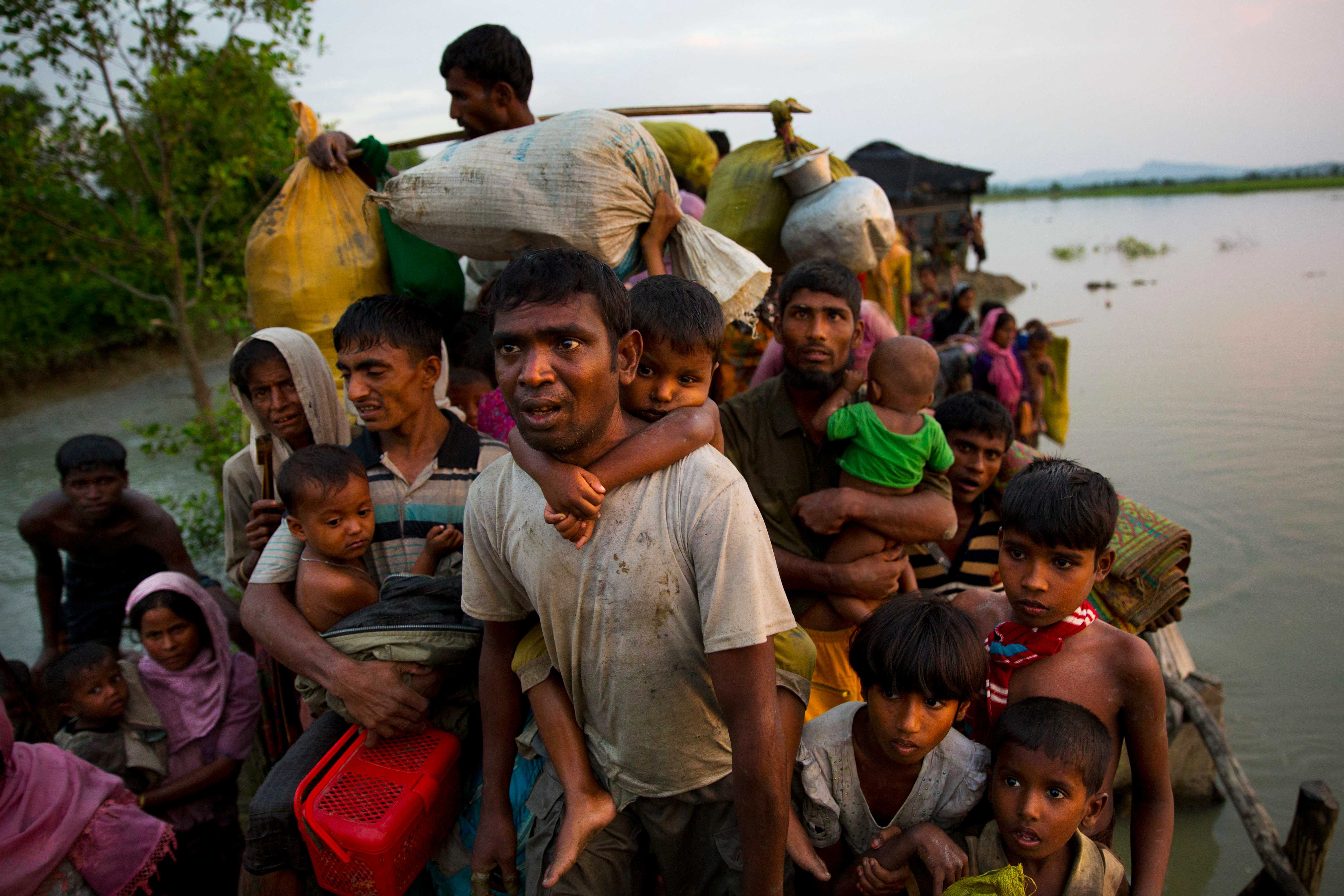


On 19 November, the International Court of Justice (ICJ) delivered a judgment that Myanmar had spent seven years trying to avoid. By nine votes to six, the United Nations’ principal judicial body found that Myanmar had committed genocide against the Rohingya in northern Rakhine State during the military’s 2017 clearance operations. The ruling also established that the country had violated several obligations under the 1948 Genocide Convention, including its duties to prevent and punish genocide and to preserve evidence relating to the alleged crimes.
The decision marks the first time the ICJ has found a state responsible for committing genocide. Its significance extends beyond the legal consequences for Myanmar. For a community whose persecution had been repeatedly denied or presented by the authorities as a security problem, the judgment establishes an authoritative legal account of what happened. The military campaign was not simply an excessive response to an insurgency. The court concluded that the evidence demonstrated an intention to destroy a substantial part of the Rohingya population.
The distinction matters because genocide is not simply another term for mass killing. Under the Genocide Convention, adopted in 1948, the crime requires proof of specific intent to destroy, in whole or in part, a national, ethnic, racial or religious group. The prosecution of such a case therefore involves more than establishing that civilians were killed, villages destroyed or populations displaced. The court must also determine whether those acts were committed with the particular intention required by the convention.
That requirement makes genocide cases especially difficult to prove. Intent is rarely expressed in a single document or explicit order. It must often be established through the relationship between the acts themselves, their scale, the people targeted, the circumstances in which they occurred and the broader pattern of conduct. In the Myanmar case, the judges examined evidence of killings, sexual violence, serious bodily and mental harm, measures intended to prevent births and the destruction of communities. The court concluded that the military campaign was carried out with the intent to destroy a substantial part of the Rohingya group.
The findings also exposed the limitations of Myanmar’s longstanding defence. Throughout the proceedings, the authorities maintained that the military operations launched in August 2017 were legitimate security measures against armed Rohingya insurgents. The campaign followed attacks by the Arakan Rohingya Salvation Army on security posts. Myanmar argued that its forces were responding to an insurgency, not pursuing an ethnic population.
The existence of an armed threat, however, does not exempt a government from its obligations under international law. A state may take legitimate measures to protect its population and confront armed groups, but those powers do not authorise attacks on civilians because of their ethnic or religious identity. The court rejected Myanmar’s attempt to explain the campaign as a counterinsurgency operation alone. After considering the evidence as a whole, it found that genocidal intent was the only reasonable inference.
This conclusion places the violence within a longer history of state discrimination. The Rohingya had faced restrictions on movement, access to education, employment and other basic rights long before the military campaign of 2017. Many were denied effective citizenship and excluded from the national identity recognised by the Myanmar state. The 1982 Citizenship Law became a central instrument in this process, leaving large numbers of Rohingya without recognised citizenship and making their legal position increasingly precarious.
The military operations transformed that discrimination into a mass displacement crisis. More than 700,000 Rohingya fled to Bangladesh after the 2017 campaign, escaping killings, sexual violence, the destruction of settlements and other abuses. Their departure added to an existing refugee population and created one of the world’s most protracted displacement situations. In Bangladesh, particularly around Cox’s Bazar, families have spent years in crowded camps exposed to disease, inadequate sanitation, landslides during the monsoon and increasingly limited economic opportunities.
For many, displacement has ceased to be a temporary interruption to ordinary life. Children have grown up in refugee settlements without knowing whether they will ever return to their homes. Families remain separated, property has been lost and the possibility of rebuilding a life in Myanmar depends on political and legal changes that have yet to materialise. The court’s judgment therefore addresses a crime whose consequences continue long after the military operation itself.
The case reached The Hague through an initiative that did not originate with the victims themselves. In November 2019, The Gambia filed proceedings against Myanmar, alleging violations of the Genocide Convention. The West African country acted with the support of the Organisation of Islamic Cooperation, but the legal basis of its application was broader than solidarity with a persecuted Muslim community.
The Genocide Convention creates obligations for all states that have joined it. Its provisions are not merely a matter between a government and the population under its control. Other states parties have a legal interest in ensuring that the convention is respected, including when the alleged violations occur outside their territory. The Gambia relied on that principle to bring Myanmar before the ICJ.
The initiative also carried a particular political significance. The Gambia had emerged from the authoritarian rule of Yahya Jammeh, whose government was responsible for serious human rights violations. After Jammeh’s departure, the new authorities pursued accountability for abuses committed during his rule. That experience provided part of the context for the country’s decision to seek international justice. Yet the strength of the case against Myanmar rested on the convention and the evidence, not on a claim that the two countries shared identical political histories.
The proceedings also demonstrated the importance of preserving evidence when access to the territory where crimes occurred is restricted. The court considered witness testimony, expert material and investigations assembled by the Independent Investigative Mechanism for Myanmar, a United Nations body established to collect, consolidate and analyse evidence of serious international crimes in the country.
The mechanism said the judges gave considerable evidentiary weight to its witness statements and analytical reports, reflecting the demanding methodology used to collect and assess the material. Such evidence is particularly important when the alleged perpetrators control the territory in which the crimes took place. Investigators may have limited access to sites, official records may be unavailable and survivors may be scattered across national borders. Without systematic documentation, the passage of time can make accountability increasingly difficult.
The court’s findings extended beyond the military campaign itself. Myanmar was also found to have violated its obligations to prevent genocide, punish those responsible and enact legislation necessary to give effect to the convention. It further found that the country had failed to comply with its obligation to preserve evidence under the court’s provisional measures order of 23 January 2020.
That last finding carries particular weight. A state accused of genocide cannot meet its international obligations simply by denying the allegations. It must also cooperate with the legal process and preserve material that may establish what happened. The failure to do so became another element of Myanmar’s responsibility.
The nine-to-six vote reflected disagreement among the judges, but it did not diminish the legal force of the decision. ICJ judgments in contentious cases are final and binding on the parties. There is no ordinary appeal to a higher international court. Myanmar can no longer resolve the central question in this case simply by repeating its claim that the military campaign was a legitimate security operation.
Outside the courtroom in The Hague, the ruling carried a different significance for the people whose experiences had formed the basis of the proceedings. Rohingya activist Yasmin Ullah, who followed the judgment, described the court’s account of the community’s suffering as an important recognition of what survivors had endured. Gambia’s Attorney General and Minister of Justice, Dawda Jallow, also paid tribute to the survivors and witnesses whose testimony had helped establish the case.
Their reactions point to something that a legal judgment cannot provide in material terms. Recognition cannot restore a destroyed home, reunite a family or replace a lost livelihood. But it can establish that the suffering was not an incidental consequence of a security operation. It was part of an internationally recognised crime for which a state bears responsibility.
That distinction is the achievement of the judgment. Whether it can produce the conditions necessary for the Rohingya to recover their rights is a separate question, one that leads beyond the courtroom and into the difficult politics of enforcement.
The distance between a judgment and justice
The court’s ruling does not leave Myanmar with a single obligation that can be satisfied through a declaration of regret or a promise to investigate. It sets out a series of measures intended to address both the crimes and the conditions that made the Rohingya vulnerable. Myanmar must take immediate and effective steps to investigate people reasonably suspected of committing acts prohibited by the Genocide Convention and prosecute and punish them where warranted. It must also provide assurances against repetition, enact legislation giving effect to its obligations under the convention and adopt measures of restitution for the Rohingya.
The restitution measures are particularly significant because they recognise that the consequences of genocide cannot be addressed solely through criminal proceedings. The court requires Myanmar to facilitate the safe, voluntary and dignified return of displaced Rohingya to their places of residence, reunite separated families, return or replace property that was lost or damaged, assist in locating missing people and recovering and reburial of bodies, and provide physical and psychological rehabilitation for those injured. It must also protect the community against discrimination and persecution.
These requirements make clear that repatriation alone would not constitute meaningful restitution. A family allowed to cross the border into Rakhine State but denied access to its former home, property or livelihood has not recovered what it lost. Nor can a return be considered voluntary and dignified if those arriving face restrictions on movement, insecurity or the threat of renewed persecution. The court’s measures therefore reach beyond the physical movement of refugees. They address the rights and conditions necessary for the Rohingya to live as a protected community rather than a population tolerated at the discretion of the authorities.
Citizenship remains central to that problem, although the court’s restitution orders should not be mistaken for a separate, explicit order granting citizenship to every Rohingya. The judgment examines the history of discriminatory citizenship laws and policies as part of the context in which the genocide occurred. The 1982 Citizenship Law, restrictions on marriage and births, and limitations on movement and access to public life helped establish a system in which Rohingya were treated as outsiders in the country where they had lived for generations. Restoring their security and dignity will require confronting that system, not simply arranging their return.
The court’s examination of anti-Rohingya hate speech also offers a broader account of how the violence developed. Its judgment considers statements by senior military figures, discriminatory narratives and a network of Facebook pages linked to the military. These materials were assessed alongside evidence of selective attacks on Rohingya villages, sexual violence, attacks on children and the systematic destruction of settlements. The judges treated the broader pattern as relevant to determining whether the military campaign had been conducted with genocidal intent.
There is, however, an important legal distinction between the existence of hate speech and the crime of direct and public incitement to genocide. The court did not find Myanmar responsible for directly and publicly inciting private individuals to commit genocide against the Rohingya. That conclusion, adopted by 15 votes to one, does not erase its separate finding that Myanmar committed genocide or its assessment of anti-Rohingya rhetoric as part of the wider context. It illustrates the precision required in international criminal law: evidence may be relevant to establishing intent without necessarily satisfying the elements of a different offence.

The distinction also matters beyond the courtroom. Public hostility towards a minority does not automatically establish that a state has committed genocide. But when discriminatory policies, official rhetoric, selective targeting and organised violence converge, they can reveal a pattern that cannot be understood by examining individual incidents in isolation. In Myanmar, the court’s reasoning connected the treatment of the Rohingya before 2017 with the military campaign itself. The history of exclusion was not incidental background. It helped explain the conditions under which the violence took place and the intention behind it.
Compensation presents another unresolved challenge. The ICJ established Myanmar’s obligation to compensate the Rohingya, individually and as a group, for damage not adequately repaired through restitution. It did not determine the final amount or the precise arrangements for payment. Those questions have been reserved for a subsequent phase of proceedings. Myanmar must submit a report to the court within two years of the judgment, detailing the restitution measures adopted and the amount and modalities of compensation.
The distinction between recognising a right to compensation and securing payment is substantial. The losses suffered by the Rohingya include destroyed homes and property, physical injuries, psychological trauma and the economic consequences of prolonged displacement. Some losses cannot be measured in money. Deaths, missing relatives and the destruction of family and community life cannot be reversed by a financial award. The court’s requirement to assist in locating the disappeared and recovering and reburial of bodies acknowledges a dimension of harm that a conventional calculation of economic damage would overlook.
Even so, the question of who will ensure compliance remains unresolved. The ICJ can determine whether a state has violated international law and specify the legal consequences. It does not have its own police force, detention facilities or administrative authority inside the countries subject to its judgments. It cannot send investigators into Myanmar against the government’s will, compel officials to surrender suspects or organise the return of refugees.
The United Nations Charter provides a mechanism for addressing non-compliance. Under Article 94, members of the United Nations undertake to comply with ICJ decisions in cases to which they are parties. If a state fails to perform its obligations under a judgment, the other party may bring the matter before the Security Council, which can make recommendations or decide on measures to give effect to the ruling.
But the mechanism is not an automatic enforcement system. The Security Council is a political body, not an appellate court or an international police authority. Its five permanent members hold veto powers, and their competing strategic interests can prevent collective action even when a judicial decision has established a clear legal obligation. A judgment may therefore be legally binding without producing an immediate political response capable of compelling compliance.
Myanmar’s political circumstances make this problem particularly acute. The court’s orders require action by institutions responsible for investigating crimes, preserving evidence, protecting citizens and administering justice. If those institutions remain controlled by officials unwilling to accept the judgment, implementation will be difficult. A government can be legally bound by an international decision while continuing to resist its practical consequences.
The change of political leadership, should it occur, would not automatically remove Myanmar’s obligations. Responsibility attaches to the state, not simply to the individuals occupying government positions when the violations occurred. A successor administration would inherit the duty to comply. Yet the continuity of legal responsibility does not guarantee continuity of political commitment. The implementation of the judgment will depend on whether the authorities controlling state institutions are prepared to undertake the reforms and investigations it requires.
Another distinction is equally important: the ICJ’s finding of state responsibility does not amount to the criminal conviction of individual military officers or political leaders. The court determines disputes between states and assesses whether international obligations have been breached. It does not impose prison sentences on individuals. Individual criminal responsibility must be pursued through separate legal proceedings, including those of the International Criminal Court where jurisdictional requirements are met.
This separation does not make the ICJ judgment less consequential. It establishes the state’s responsibility and provides an extensive judicial assessment of the evidence. But it would be misleading to suggest that the decision automatically results in the arrest or prosecution of those who planned or carried out the military operations. Those processes require their own investigations, jurisdictional foundations and enforcement arrangements.
The judgment may nevertheless strengthen wider efforts to establish individual accountability. The court considered witness statements, military documents, satellite evidence, United Nations investigations and other material gathered over several years. Its findings concerning the destruction and preservation of evidence are particularly relevant to future proceedings. The court found that Myanmar had failed to meet its obligation under the provisional measures order of January 2020 to take effective steps to prevent the destruction of evidence and ensure its preservation.
The preservation of evidence is not a technical concern separate from justice. It determines whether investigators can establish the sequence of events, identify perpetrators and connect decisions made within military and government structures to crimes committed on the ground. Without reliable records and testimony, the passage of time can shield those responsible from accountability. The court’s finding therefore addresses not only Myanmar’s conduct during the campaign but also the state’s obligations after allegations of genocide had been formally brought before an international tribunal.
The ruling also carries implications for other disputes involving the Genocide Convention. South Africa’s case against Israel over alleged genocide in Gaza and Ukraine’s case challenging Russia’s invocation of the convention to justify its invasion have both drawn attention to the ICJ’s interpretation of the treaty. Each proceeding has its own factual record, legal arguments and jurisdictional questions. The Myanmar judgment does not predetermine their outcomes.
Its reasoning will nonetheless be closely examined. The judges’ treatment of specific intent, indirect evidence, discriminatory policies and patterns of violence provides material for governments, lawyers and researchers working on other cases. The decision also reinforces the principle that a government cannot avoid its obligations under the Genocide Convention simply by describing military operations as counterterrorism or national security measures.
That principle is particularly important because states often invoke security to defend actions that affect civilian populations. The court did not deny that Myanmar faced attacks by an armed group. Instead, it examined whether the response was consistent with the obligations imposed by the convention and whether the evidence supported the government’s explanation. Its conclusion was that the security justification could not account for the full pattern of conduct.
International reactions to the ruling have reflected both its moral significance and the limits of diplomatic agreement. United Nations Secretary-General António Guterres welcomed the judgment as recognition of the Rohingya victims and a reaffirmation that impunity should not prevail. He called for compliance with the court’s decision and stronger international support for accountability.
The Gambia welcomed the ruling as a historic achievement and credited the perseverance of Rohingya survivors and witnesses. Its government also urged Myanmar and the international community to support implementation. Human Rights Watch described the decision as an important milestone in the community’s pursuit of justice and called on governments to press Myanmar to comply.
Myanmar, meanwhile, rejected the judgment as unfair and maintained that its military operation had targeted insurgents. The authorities argued that the decision was not unanimous and said they needed time to study its extensive reasoning. The rejection does not change the judgment’s binding status, but it offers an indication of the political resistance that may confront efforts to implement it.
For the Rohingya, however, the most immediate test will not be measured in diplomatic statements or legal commentary. It will be measured in whether families can return to their homes without fear, recover property, obtain protection against discrimination and live without restrictions imposed on the basis of their identity. More than 700,000 people who fled in 2017 remain part of a much larger refugee population in Bangladesh. A judicial declaration cannot, by itself, change their circumstances.
A return programme without meaningful guarantees could reproduce the conditions that made the 2017 campaign possible. The absence of citizenship, restrictions on movement and continued hostility would leave refugees exposed to the same structural exclusion they escaped. The question is not simply whether Myanmar will allow the Rohingya to cross its borders again. It is whether the state will recognise their rights and protect them as members of the society from which they were driven.
Dawda Jallow described the judgment as a victory for the Rohingya, whose testimony and persistence had helped bring the case to this point. That recognition matters. For years, survivors faced official denial and the difficulty of persuading international institutions to examine what had happened. The court has now made a determination after considering evidence through a formal legal process. Their experiences have become part of an authoritative judicial record that Myanmar cannot overturn through a unilateral political declaration.
Yet the value of that recognition will ultimately depend on what follows. The court has established the legal responsibility of the state and identified measures intended to repair the damage. It has not guaranteed that Myanmar will carry them out, that the Security Council will overcome political divisions or that individual perpetrators will face criminal proceedings.
The judgment of 19 November has settled a central question of international law: Myanmar committed genocide against the Rohingya. The remaining question concerns the willingness of governments and international institutions to turn that finding into enforceable change. For the survivors, justice will mean more than having the truth recognised in The Hague. It will mean being able to live in their homeland with rights, security and dignity that no government can again take away.
Leave a Reply