

The contest for influence in the South China Sea is not always played out through warships confronting one another or military aircraft crossing disputed airspace. Much of it takes place more quietly, through logistics facilities, intelligence sharing, military training and agreements that allow forces from different countries to work together with fewer administrative obstacles. For the Philippines, these arrangements are more than bureaucratic improvements. The country faces recurring maritime pressure from China and needs greater capacity to monitor its vast waters. For Australia, helping strengthen Philippine capabilities while expanding its defense partnerships in Southeast Asia serves its own strategic interests. Both countries have an incentive to prepare for an uncertain regional environment without relying entirely on a single major power.
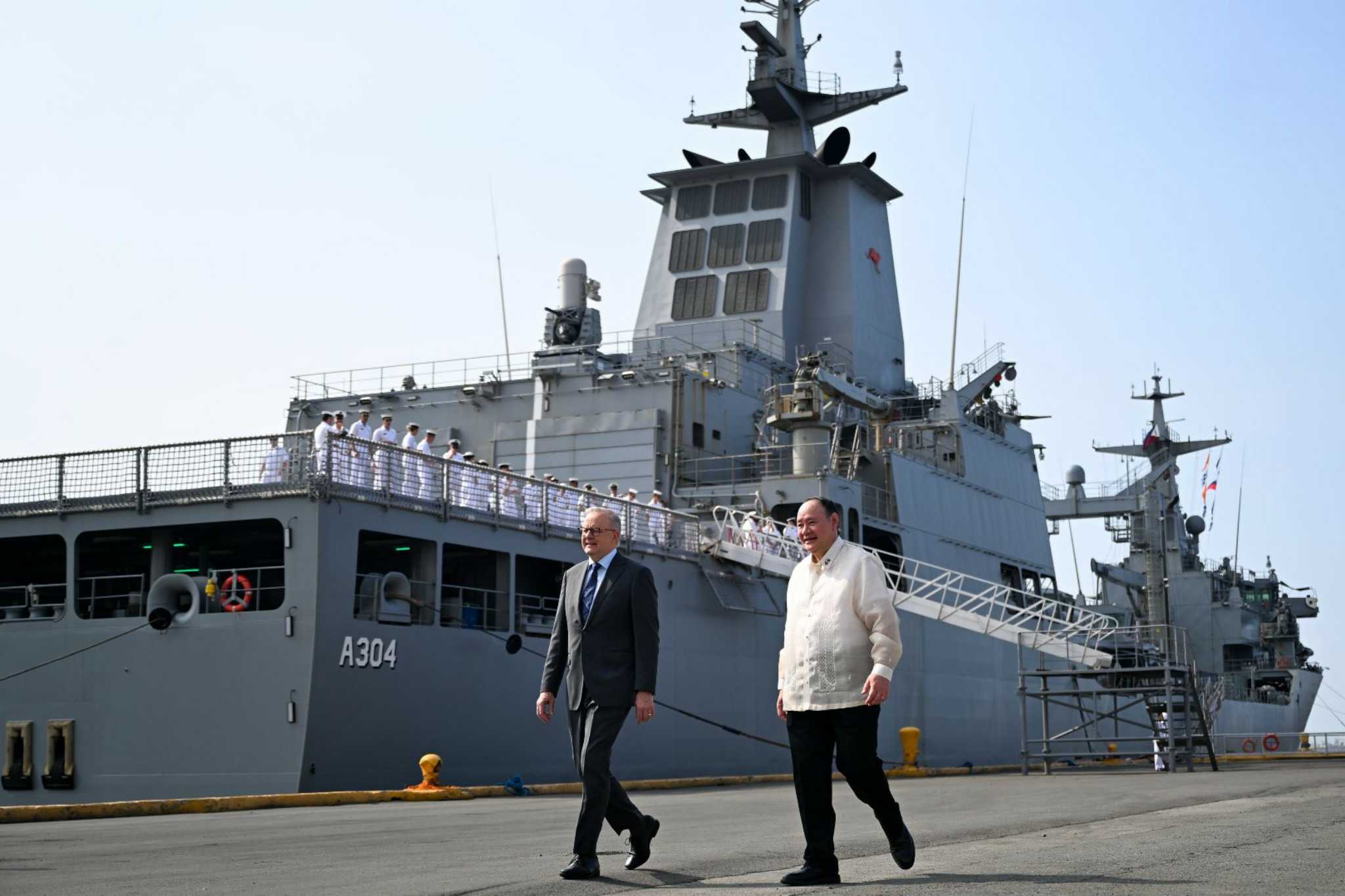
A new defense agreement signed in Manila on 15 November adds to that effort. Philippine Defense Secretary Gilberto Teodoro Jr. and Australian Ambassador Marc Innes-Brown signed the Defence Cooperation Arrangement (DCA), in the presence of Australian Prime Minister Anthony Albanese, who was visiting the Philippines for the ASEAN summit. The signing came as the two countries marked 80 years of diplomatic relations. But the agreement’s significance lies less in the anniversary or ceremony than in the framework it provides for expanding defense activities. These include maritime awareness, information sharing, joint planning, training, interoperability, logistics, cyber defense, secure communications and defense infrastructure. Reuters reported that the arrangement is also intended to reduce bureaucratic obstacles to joint military activities.
Teodoro said the agreement would simplify procedures that had previously made coordination difficult. He illustrated the change by saying that activities that once required 100 administrative steps could now be completed in 10. His comparison points to a problem that goes beyond shortages of equipment or personnel: procedures themselves can slow cooperation. Joint exercises require more than approval from senior officials. The two countries must coordinate troop movements, access to facilities, equipment, communications and their respective responsibilities. Simplifying those procedures should make it easier to plan activities regularly, although all operations must still comply with each country’s laws and existing legal arrangements.
Two earlier agreements help explain the role of the DCA. Australia and the Philippines had based much of their defense cooperation on a Memorandum of Understanding on Cooperative Defence Activities, which took effect on 22 August 1995. The Status of Visiting Forces Agreement (SOVFA), was signed on 31 May 2007, and entered into force on 28 September 2012. It governs the legal status of visiting military personnel while they are in the other country. Australian parliamentary documents explain that the 1995 memorandum did not address the legal status of foreign forces in the host country, creating the need for a separate agreement.
The new DCA supersedes and modernizes the 1995 memorandum while complementing the separate SOVFA. It provides a broader framework for defense cooperation and is intended to make activities under existing arrangements easier to carry out. The distinction matters because the term defense agreement can suggest that two countries have formed a military alliance or promised to defend each other if either is attacked. The DCA should not be confused with a mutual defense treaty. It strengthens operational cooperation but does not, by itself, create an automatic obligation to enter a war.
Its value lies in building coordination before a crisis occurs. Forces that train together become more familiar with one another’s procedures, communications systems, equipment and limitations. That familiarity can reduce the risk of mistakes during emergencies, whether in maritime operations, humanitarian missions or disaster response. The agreement also gives the two governments a basis for developing cooperation in areas such as logistics, personnel recovery and cyber defense, where coordination can be as important as the equipment involved.
Military ties between Australia and the Philippines were already developing before the DCA was signed. The two countries have conducted joint exercises and maritime patrols, including in the South China Sea, and have taken part in activities involving other partners. Reuters reported that the new arrangement creates more room for cooperation among their naval, air and land forces. It also covers humanitarian assistance and disaster relief. Their defense relationship, therefore, is not directed solely at the possibility of armed conflict. The capabilities they build together can also help manage emergencies, improve coordination among agencies and strengthen safety across the maritime region.
Even so, the South China Sea is difficult to separate from the agreement’s strategic purpose. The Philippines has repeatedly clashed with China over maritime claims and the activities of vessels in the disputed waters. Encounters between the two countries’ coast guard ships have shown how quickly tensions can rise without developing into open warfare. ABC has reported on incidents around the Spratly Islands and Scarborough Shoal that continue to strain relations between Manila and Beijing. China claims much of the South China Sea through its nine-dash line, while the Philippines and several other Southeast Asian countries maintain maritime claims under international law. In 2016, an arbitral tribunal established under the United Nations Convention on the Law of the Sea rejected the legal basis for China’s expansive historic rights claims within the nine-dash line. Beijing has refused to accept the ruling.
In this environment, the ability to monitor the waters is an urgent requirement for the Philippines. Coast guard vessels cannot be everywhere at once, while foreign ship movements, illegal fishing and threats to undersea infrastructure require sustained surveillance. Australia has supported efforts to improve Philippine capabilities through assistance to its coast guard. According to ABC, Canberra had provided more than A$13 million in support since April 2025, much of it for drones and operator training. The assistance is intended to help the Philippines monitor Chinese naval and coast guard vessels, track illegal fishing, protect undersea cables and detect military drones.
The support extends beyond a single equipment package. Australia has also announced additional investment through its Southeast Asia Maritime Partnerships program, which supports maritime awareness and cyber resilience through aerial and surface drones, secure communications and operator training. A joint statement from the Australian government said the investment would help regional partners improve their ability to detect and respond to maritime and cyber threats. Reuters also reported that Albanese announced further investment in drone technology, equipment and training for maritime surveillance. These developments reflect a broader shift in modern defense: the ability to gather information and identify activity at sea can be as important as the number of ships or aircraft a country possesses.
But surveillance equipment alone does not create an advantage. Drones require trained operators, maintenance, communications networks and analytical systems before the information they collect can be put to use. The same is true of uncrewed vessels and other monitoring equipment. Without clear procedures for sharing and acting on information, technology can produce data that does little to improve decisions. Operator training and information sharing are therefore central to the new cooperation. The Philippines needs to turn surveillance findings into effective responses, while Australia has an interest in ensuring that the support it provides can be used effectively by its partner.
Infrastructure is another part of the relationship. ABC previously reported that Australia was undertaking eight construction and maintenance projects at five Philippine military bases on Luzon. The projects support logistics, training and military safety facilities. The Australian government has emphasized that the facilities remain under Philippine ownership and sovereignty. The projects should not be mistaken for the establishment of Australian-owned bases or a transfer of territorial control. For Manila, cooperation must strengthen national defense while preserving its authority over its own territory and military facilities.
Construction projects may attract less attention than announcements of new weapons, but they help determine whether military capabilities can be sustained. Forces need places to train, store and maintain equipment, and organize logistics. Ships and aircraft cannot operate on technical capability alone; they also depend on support on land. Investment in Luzon strengthens Philippine facilities and creates more opportunities for operational cooperation with Australia. The island has an important geographic position, facing the South China Sea and lying near strategic routes in the western Pacific.
David Dutton, a researcher at the Australian Strategic Policy Institute (ASPI), has argued that the Philippines is becoming increasingly important to Canberra’s efforts to maintain a regional balance of power and strengthen deterrence. In a report published 10 November, Dutton described the defense relationship as an increasingly substantive strategic partnership. His assessment reflects a shift in how Australia views the Philippines. Manila is no longer simply one of several partners in Southeast Asia. It has become more central to Canberra’s security calculations, particularly because Chinese pressure on the Philippines is taking place in waters that are also important to Australia’s trade routes and strategic interests.
For Albanese, Australia’s interests in the South China Sea extend beyond security relations. The waterway is a major trade corridor connecting Australia with markets across Asia and the rest of the world. The prime minister has stressed the importance of international maritime law, freedom of navigation and maritime awareness. He has also said that one in four Australian jobs depends on trade. That argument gives Canberra’s regional involvement an economic basis. Disruptions to shipping in the South China Sea could affect supply chains, deliveries and the economic activity that supports Australian employment. Regional stability is therefore not simply a matter of diplomatic relations with the Philippines. It is also a national economic interest.
The DCA reflects a broader reality: countries across the region are building their defense capabilities to prepare for an increasingly unpredictable strategic environment. The agreement gives the Philippines support to improve surveillance and military coordination. For Australia, it extends its strategic role in Southeast Asia. But stronger capabilities do not necessarily reduce tensions. When one country deepens military ties with an outside partner, another may interpret the move as a shift in the balance of power against its interests. The question is not only how much new capacity the two countries can build, but how they can use it without narrowing the space for diplomacy.
When Security Guarantees Are Questioned
Behind the closer relationship between Australia and the Philippines lies a broader question: How far can Southeast Asian countries rely on the United States to protect regional security? For decades, Washington has been a major pillar of the Indo-Pacific security architecture through alliances, military exercises, troop deployments and cooperation with partner countries. For the Philippines, the relationship has particular importance because the two countries are bound by a mutual defense treaty. But the existence of a treaty does not remove the need to assess how consistently the country providing the guarantee will honor its political and military commitments. As Washington moves some of its military assets to other regions, questions about its strategic priorities are resurfacing in Manila and elsewhere in the Indo-Pacific.
In August, the movement of U.S. defense assets from the Pacific to the Middle East, including the aircraft carrier USS George Washington, raised concerns about the availability of American military power in the region. Reuters reported that Philippine military officials did not expect the shift to reduce joint military activities with the United States. Military spokesman Roy Vincent Trinidad said cooperation was not expected to slow despite the movement of some assets. His remarks showed that Manila was seeking to distinguish changes in military deployments from the broader commitment underpinning the alliance. But official assurances do not remove a more basic concern: military assets deployed elsewhere may be less available if a crisis develops in the Indo-Pacific.
Similar concerns appeared in an ABC report ahead of the DCA signing. Several analysts interviewed by the broadcaster said the transfer of U.S. assets to the Middle East could reduce Washington’s military presence in the Indo-Pacific as Chinese activity around the Philippines and Taiwan increases. Jennifer Parker, a maritime security expert, said American attention to conflicts in the Middle East could draw resources away from the region. Such assessments, however, should not be treated as proof that Washington has abandoned the Philippines. The United States continues to declare its commitment to Indo-Pacific security, and Manila has said joint military activities are not being reduced. The issue is not whether the alliance has ended, but how partner countries can prepare for possible changes in Washington’s priorities.
For the Philippines, the answer is not to sever ties with the United States but to broaden its network of security partnerships. In recent years, Manila has expanded cooperation with Australia, Japan, Canada, New Zealand, France and India. These relationships give the Philippines more avenues for training, technology, intelligence and defense support. ABC has reported that Australia has become one of the Philippines’ most important security partners after the United States. Euan Graham, a researcher at the ASPI, said the administration of President Ferdinand Marcos Jr. was seeking a more diverse set of security partnerships rather than relying solely on Washington. Diversification does not replace the existing alliance. It gives Manila more options as it faces pressure in its maritime territory.
But not all partnerships offer the same commitments. Australia, Japan, India and other countries have different interests, capabilities and limits on their involvement. None automatically provides the same treaty guarantee as the United States. Manila must therefore manage a wider range of relationships without treating every partnership as a direct substitute for its defense alliance with Washington. Diversification can reduce dependence on a single partner, but it cannot eliminate the need for clear expectations about what each country is prepared to do in a crisis.
Australia, meanwhile, is expanding its security relationships across Southeast Asia. In February, Canberra and Jakarta signed the Australia-Indonesia Treaty on Common Security, known as the Jakarta Treaty. The agreement provides for regular consultations between leaders and ministers on shared security concerns. The two countries also committed to consulting one another when either faces a challenge affecting their common security interests and, where appropriate, considering measures they could take individually or together. The treaty does not establish an automatic obligation to provide military assistance. Its significance lies in creating a formal process for discussing security challenges and coordinating possible responses.
Australia’s relationship with Vietnam has also developed through a comprehensive strategic partnership that includes defense training, information sharing and maritime security. Taken together with its cooperation with the Philippines and Indonesia, these ties show Canberra’s effort to build a wider network of partnerships across Southeast Asia. Australia does not need permanent bases or formal military alliances with every country to expand its regional role. Cooperation can take place through exercises, consultations, technology assistance, personnel exchanges and support for maritime capabilities. This approach gives partner countries room to maintain their own foreign policies while strengthening their ability to address shared concerns.
The network is also developing beyond Australia’s bilateral relationships. On 10 November, defense ministers from Australia, Japan, the Philippines and the United States announced further steps to strengthen coordination, including the establishment of a Combined Coordination Center in the Philippines. The initiative is intended to improve cooperation, planning and interoperability among the four countries. It provides a more concrete example of how bilateral defense relationships can connect with wider regional arrangements. The development also shows that the emerging security network is not simply an Australian project or a series of separate agreements. It is increasingly linked to coordination among countries that share concerns about maritime security and regional stability.
Yet a wider network does not automatically produce better coordination. Southeast Asian countries have different assessments of threats, different economic relationships with China and different views on the appropriate role of the United States and other outside powers. A September report by Hunter Marston of the Lowy Institute examined coordination problems in ASEAN’s security mechanisms. The region has many institutions and forums, but competing national interests, uneven levels of trust and fragmented arrangements can make it difficult to respond effectively during a crisis. The problem is relevant to the growing network of defense partnerships: more channels for cooperation do not necessarily make it easier for countries to act together when an emergency occurs.
Australia’s involvement also carries diplomatic risks. China has repeatedly objected to military activities between the Philippines and its partners, arguing that such exercises increase regional tensions. Beijing describes its actions in the South China Sea as lawful and professional, while the Philippines and its partners view Chinese activities as pressure on maritime rights and regional stability. Reuters reported that China’s defense and foreign ministries had not immediately responded to the DCA announcement. Beijing has previously criticized joint military activities involving the Philippines and its partners. Its position suggests that closer defense cooperation between Manila and Canberra will be viewed through the lens of an existing strategic rivalry, even as both countries say their aim is to preserve stability and sovereignty.
Australia has sought to avoid presenting the expanded cooperation as the creation of a military bloc specifically directed against China. Albanese has said the DCA is intended to improve maritime awareness, information sharing, strategic dialogue and defense capabilities. He has also emphasized international maritime law and freedom of navigation. These arguments provide a diplomatic basis for Canberra’s involvement: Australia wants to protect trade routes and a maritime order that allows countries to use the sea in accordance with international law. But those explanations do not change the fact that the cooperation is taking place as the Philippines faces pressure from China. In security politics, a government’s stated intentions and the strategic effects of its policies are not always the same.
Even so, Australia’s expanding role will have consequences for its relationship with China. Canberra has substantial economic interests in its ties with Beijing and has spent several years trying to stabilize a relationship that had deteriorated. At the same time, Australia wants to preserve freedom of navigation and support partners facing pressure in the region. Those objectives are not always easy to reconcile. If Australia limits its military involvement too much, regional partners may question its willingness to help maintain stability. If Canberra expands its military role without sufficient communication, Beijing may see the move as part of an effort to contain China’s influence.
Albanese’s planned visit to China for the APEC summit in Shenzhen on 18-19 November, followed by the Australia-China Annual Leaders’ Meeting in Beijing, comes against this backdrop. Canberra must manage two diplomatic tracks at once: strengthening security ties with Manila while maintaining communication with Beijing. The two goals do not have to conflict. But their success depends on Australia’s ability to explain the limits and purposes of its cooperation, as well as on the willingness of all sides to avoid actions that increase the risk of miscalculation. Diplomacy becomes more important, not less, as military capabilities and defense networks expand.
There is another issue that matters just as much: sovereignty cannot be measured only by the number of partners a country has or the equipment it can access. A country must retain control over its decisions, facilities and defense policies. The assurance that Australian-supported projects at Philippine bases remain under Manila’s ownership and sovereignty is part of that concern. Cooperation can strengthen national capabilities only if the recipient country retains control over how its facilities are managed and can set limits on its partners’ involvement. Without that control, defense assistance can create new forms of dependence even if it does not formally change a country’s sovereign status.
For that reason, the success of the DCA should not be measured only by the number of exercises conducted, drones delivered or infrastructure projects completed. More important is whether the Philippines can improve maritime surveillance, strengthen military readiness and reduce its vulnerability to pressure without losing room to make its own decisions. For Australia, success also means maintaining strong relationships with regional partners while avoiding unnecessary escalation with China. Effective defense cooperation should strengthen the ability to prevent conflict, not make every disagreement more likely to turn into a confrontation.
The security network taking shape across the Indo-Pacific reflects a region seeking more options as the distribution of power changes. Australia and the Philippines are deepening their defense relationship, while other countries are building their own partnerships and coordination mechanisms. But a growing number of agreements does not necessarily create greater certainty. Bilateral relationships can reinforce one another, yet they can also reflect competing interests and different perceptions of threats. The central challenge is to ensure that this network does not become another dividing line in a region already shaped by strategic rivalry.
The DCA is ultimately more than a document designed to make military activities easier. It signals that Australia and the Philippines are deepening their strategic relationship amid uncertainty over the priorities of major powers and rising pressure in the South China Sea. The Philippines needs the capacity to protect its maritime territory, while Australia has an interest in preserving stable trade routes and the regional order. Their interests overlap, but they are not identical. The future of their cooperation will depend not only on how closely their armed forces can work together, but also on whether both governments can protect their sovereignty, manage strategic competition and keep diplomatic channels open when their interests meet those of much larger powers.
Leave a Reply