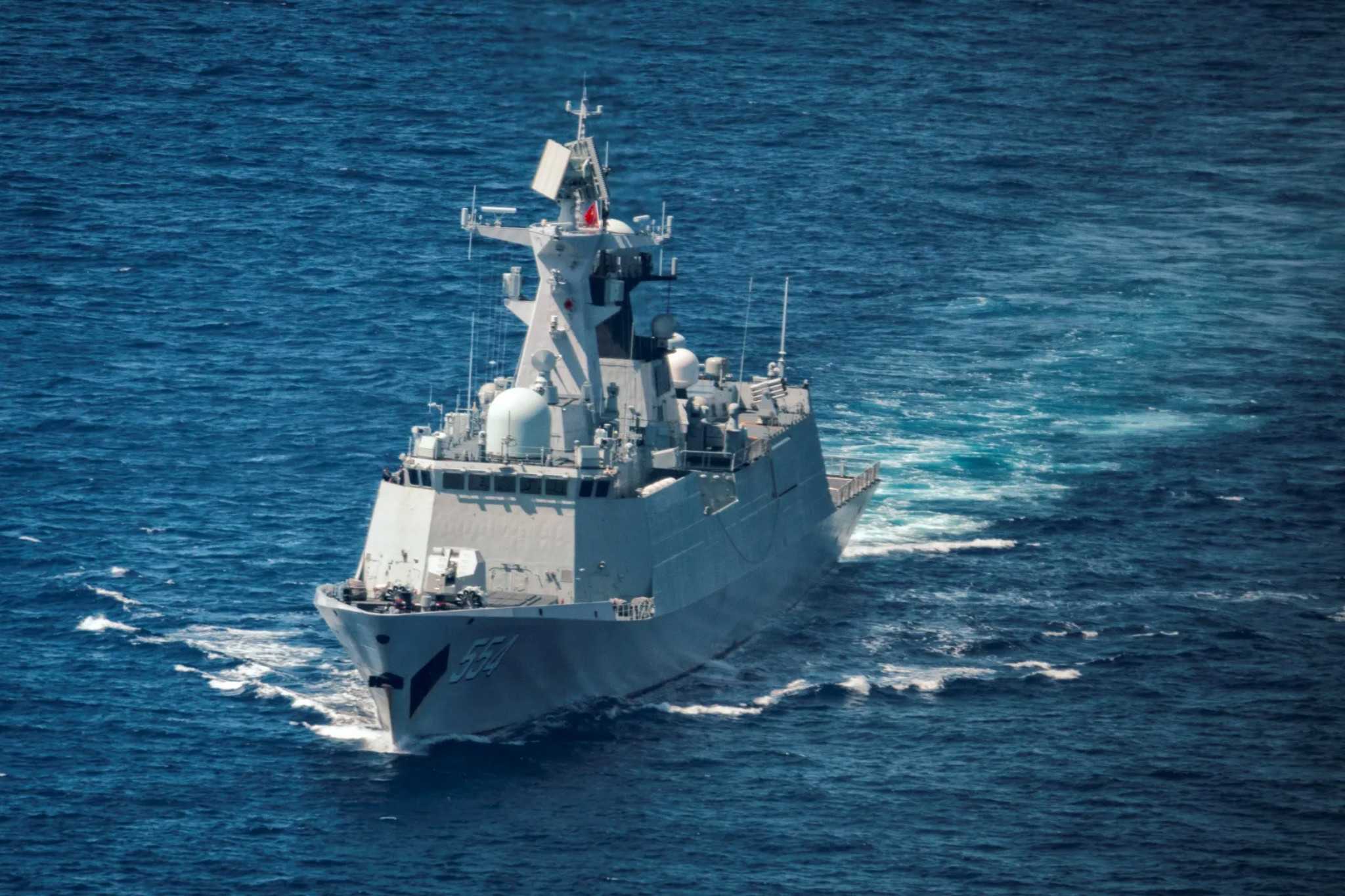


An agreement on 80% of a draft may sound like substantial progress. After years of negotiations, ASEAN and China have reached provisional agreement on about 80% of the paragraphs in a proposed code of conduct for the South China Sea. Yet that progress has not been enough to bring the talks to a close. As regional leaders gathered in Manila, the Philippines, the two sides remained divided over questions that will determine how much the agreement can achieve: whether it will be legally binding, which waters it will cover and what obligations it will place on the countries involved in the disputes. Much of the draft may be settled on paper, but its most consequential questions remain unresolved. For ASEAN, missing the deadline set by the Philippines during its 2026 chairmanship was more than an administrative setback. It showed how difficult it is to turn diplomatic commitments into rules that can shape behavior at sea.
At the 29th ASEAN-China Summit on 16 November, Philippine President Ferdinand Marcos Jr. urged both sides to find common ground. He said commitments to international law and the peaceful settlement of disputes must be reflected in action, including restraint, mutual respect and practical cooperation. Marcos made the appeal as the Philippines hosted the 49th ASEAN Summit and sought to secure a concrete result in negotiations over the South China Sea Code of Conduct (COC). The Philippines is among the countries most frequently involved in direct maritime confrontations with China. His call for restraint therefore raised a more immediate question than diplomatic language might suggest: How can countries be expected to exercise restraint when they have yet to agree on the rules governing their conduct?
Chinese Premier Li Qiang delivered a similar message, though from a different perspective. According to Xinhua, Li urged China and Southeast Asian countries to resolve differences through dialogue and consultation, oppose external interference and preserve regional peace and stability. Beijing wants to present its relationship with ASEAN as a partnership that can develop without pressure from powers outside the region. That position also serves China’s interest in maintaining its diplomatic and economic influence in Southeast Asia. But calls for dialogue do not resolve the disagreements that have stalled the COC negotiations. ASEAN wants the code to be consistent with international law. China maintains its own maritime claims and rejects the 2016 arbitration award that challenged the legal basis of its historic-rights claims. Both sides can agree that dialogue is necessary while remaining far apart on what the negotiations should produce.
The effort to establish a code of conduct for the South China Sea dates back to 2002, when ASEAN and China signed the Declaration on the Conduct of Parties in the South China Sea (DOC). The declaration called for peaceful dispute resolution and restraint from actions that could escalate tensions. It was a political commitment, not a legally binding treaty setting out detailed obligations and enforcement mechanisms. Formal negotiations on a single draft text for the COC began in 2018. The proposed code is intended to build on the DOC by establishing clearer rules for the conduct of countries operating in the disputed waters. It is not designed to settle territorial claims or determine maritime boundaries. Its purpose is to help manage differences and reduce the risk of confrontation at sea. The difficulty is that the more specific those rules become, the more directly they may affect the interests of the countries involved.
The Philippines had hoped to conclude the negotiations during its chairmanship. Foreign Secretary Ma. Theresa Lazaro said on 15 November that about 80% of the draft’s paragraphs had received provisional agreement. Negotiators had held nine rounds of talks under the Philippine chairmanship and met almost every month. But provisional agreement on individual paragraphs is not the same as final agreement on the entire document. Lazaro acknowledged that differences remained. A day later, she said the talks had not been completed because there was not enough time. She estimated that another five to six months might be needed to finish the discussions. Speaking to reporters, Lazaro rejected the characterization of the outcome as a failure, saying the Philippines had done what it could during its term as chair.
There was, however, a substantive achievement. Lazaro said the two sides had resolved one of four major outstanding issues: the relationship between the DOC and the proposed COC. They agreed that the 2002 declaration would serve as the foundation for the code and that the COC should be consistent with and build on the DOC’s principles. The agreement removed one obstacle, but three major questions remained: the COC’s legal status, its geographic scope and its terms of reference. These issues will help determine which activities the code covers, where it applies and what obligations the parties must follow. The 80% figure therefore describes progress in drafting, not agreement on the rules that will determine the code’s practical value.
The question of legal force is one of the central obstacles. Southeast Asian countries with maritime interests in the dispute want the COC to be consistent with the 1982 United Nations Convention on the Law of the Sea (UNCLOS). The convention provides the international legal framework for maritime rights and obligations, including the rules governing exclusive economic zones. For countries whose maritime claims overlap with China’s, legal certainty is an urgent concern. Rules without binding force or clear obligations could amount to little more than a statement of goodwill. Binding provisions, by contrast, would place limits on what states can do, a more difficult proposition when territorial claims and strategic interests remain unresolved. The negotiations have not established that the final code will be a legally binding treaty.
The geographic scope of the COC is another source of disagreement. A code of conduct must specify the waters in which its provisions apply. Without an agreed scope, countries could interpret differently whether a particular action violates the rules. This is not simply a matter of drawing lines on a map. The area covered by the code could affect maritime claims, the rights of countries to operate at sea and their ability to maintain a presence in waters they consider strategically important. Reuters reported that Collin Koh, a senior fellow at Singapore’s S. Rajaratnam School of International Studies, said divisions among ASEAN members had also slowed the negotiations. The obstacles, in his assessment, do not come from Beijing alone. Differences within ASEAN over the geographic scope and specific provisions of the COC have made it harder for members to agree on a common position.
Those divisions reflect the different interests of ASEAN’s members. The organization brings together countries with distinct political systems, economic priorities and relationships with China. Not every member has the same maritime claims or faces the same level of tension with Beijing. The Philippines and Vietnam have prominent direct disputes with China. Brunei and Malaysia also have maritime interests that overlap with Chinese claims. Indonesia does not claim the disputed islands, but China’s historic-rights claims overlap with Indonesia’s exclusive economic zone near the North Natuna Sea. This is a dispute over maritime rights, not a Chinese claim to sovereignty over the Natuna Islands. Other ASEAN members may place greater emphasis on economic ties with China and the need to preserve regional stability. These differences make it difficult to produce a common position that all members can accept.
Koh has warned that the remaining differences will be difficult to resolve and require significant concessions from all sides. His assessment points to a problem that cannot be explained simply as a dispute between China and ASEAN. ASEAN is not a single country with one set of maritime interests. It must reconcile the priorities of its members before negotiating with an external partner. China’s greater economic and diplomatic weight gives Beijing more room to pursue relationships with individual countries, while ASEAN must find a position that accommodates members with different expectations and limits on compromise. The result is a negotiation in which the parties do not enter the process with equal power or identical priorities.
The stakes extend beyond diplomatic relations. The South China Sea is one of the region’s most important shipping routes, connecting Asian manufacturing and trading centers with global markets. Vessels carrying energy, raw materials, industrial components and consumer goods pass through the same waters where maritime claims overlap. Rising tensions can increase shipping costs, raise concerns about navigational risks and disrupt supply chains. China’s expansive maritime claims overlap with the exclusive economic zones of Brunei, Indonesia, Malaysia, the Philippines and Vietnam. The COC is therefore about more than national prestige. Rules that help manage incidents at sea also serve the economic interests of countries that depend on these routes.
The disputes between the Philippines and China illustrate the risks of operating without agreed rules. In recent years, Manila has accused Chinese vessels of dangerous maneuvers, using water cannons and disrupting Philippine resupply missions to outposts in disputed waters. Beijing has rejected those accusations and accused the Philippines of entering waters it claims. Both governments have issued competing accounts of incidents, while coast guard and other government vessels continue to operate in the same areas. Such encounters increase the risk of miscalculation. An action one side describes as law enforcement may be viewed by the other as intimidation or a violation of its rights. Without an agreed mechanism for managing encounters, a confrontation at sea can prompt another response and raise the risk of escalation.
The arbitral tribunal’s 12 July 2016 award added a legal dimension to the dispute. The tribunal established under UNCLOS found that China’s claims to historic rights within the nine-dash line had no legal basis to the extent that they exceeded the maritime entitlements permitted by the convention. It also found that China had violated the Philippines’ sovereign rights by interfering with fishing and petroleum exploration activities in areas where the Philippines held maritime entitlements. The award is final and binding under UNCLOS. But the tribunal did not decide sovereignty over the disputed islands or determine maritime boundaries. China rejected the ruling and maintained that the tribunal had no jurisdiction to hear the case. The award clarified important aspects of maritime rights without resolving every political and territorial dispute in the region.
For the Philippines, the failure to conclude the COC in 2026 is an irony. It chaired ASEAN while facing a dispute that directly affects its maritime security, yet it could not bring all members and China to an agreement. Lazaro said the draft would be handed over to Singapore, which will assume the ASEAN chairmanship in 2027. A change of chair could create more time and diplomatic space, but it will not automatically resolve the underlying differences. Singapore will inherit a draft negotiated over many years, with its most consequential provisions still disputed by parties with direct interests in the outcome. The challenge is not simply to settle the remaining paragraphs. It is to ensure that the final document contains rules that countries can put into practice.
Trade as a Buffer
There is a reason the failure of the COC negotiations has not halted the development of ASEAN-China relations. Beyond the maritime disputes, the two sides have economic ties too extensive to set aside in diplomatic calculations. China is ASEAN’s largest trading partner, while Southeast Asian countries are important parts of Beijing’s production, investment and trade networks. Those ties span manufacturing, energy, infrastructure, agriculture, technology and services. Even as government vessels face off in the South China Sea, businesses and governments must keep goods, investment and raw materials moving. Political tensions do not erase economic needs. The scale of trade gives both sides an incentive to avoid a conflict that could damage their shared interests.
According to Reuters, Chinese Premier Li Qiang told the ASEAN-China Summit in Manila on 16 November that trade between China and ASEAN exceeded $1 trillion in 2025, while cumulative two-way investment had surpassed $500 billion. In a transcript of his speech published by China’s Ministry of Foreign Affairs, Li provided further details, saying trade had increased by 20.1% compared with 2021 and grown by 29.6% in the first 10 months of 2026. He also said cumulative investment had risen by more than 50% over the previous five years. These figures were presented by Li as evidence of the strength of economic ties between China and ASEAN.

Li placed those developments against what he described as a global economy increasingly shaped by unilateralism, protectionism and geopolitical conflict. He urged ASEAN and China to uphold multilateralism and free trade while expanding the benefits of cooperation. His remarks carried a political message. U.S. President Donald Trump has used import tariffs as a central trade policy tool, while economic relations between Washington and Beijing have faced renewed tensions. By emphasizing openness and free trade, China is seeking to portray itself as a partner in regional economic integration, in contrast with the protectionist policies it criticizes. But its rhetoric on free trade does not settle questions about its own economic practices, including market access, industrial competition and supply-chain dependence. Li’s remarks are best understood as Beijing’s diplomatic position, not a complete account of the economic relationship.
For ASEAN countries, economic ties with China bring both opportunities and risks. The Chinese market absorbs a range of Southeast Asian products, while Chinese companies invest in the region’s industries, infrastructure and technology. These links can create jobs, expand production capacity and support transport networks. But dependence on a major trading partner can also constrain policy choices when political relations deteriorate. ASEAN members must ensure that economic interests do not prevent them from objecting to actions they consider violations of international law. At the same time, they have reason to avoid policies that could unnecessarily disrupt trade. The dilemma is not simply a choice between China and international law. Governments must manage economic and security relationships that operate at the same time, even when the demands of one conflict with those of the other.
That caution is reflected in the language used by ASEAN leaders. Marcos did not present maritime disagreements as a reason to end cooperation with Beijing. Instead, he said ASEAN and China should continue seeking common ground and pursuing practical cooperation. The position reflects the Philippines’ own interests. Manila needs international support in its maritime dispute, but China remains an important economic partner. The Philippine government must defend its maritime rights while maintaining trade and investment ties that can benefit its economy. This approach does not mean the differences have been resolved. It shows an effort to prevent one dispute from damaging the wider relationship.
The economic agenda in Manila extended beyond trade in goods and investment. On 14 November, ASEAN members signed the Digital Economy Framework Agreement (DEFA), designed to strengthen digital trade, electronic payments, standards and data governance. The agreement also addresses emerging issues such as artificial intelligence (AI). ASEAN expects the framework to take effect in early 2027. Its signing showed that the organization can make progress on shared economic rules even as its members struggle to agree on maritime security.
ASEAN and China also designated 2027 as the Year of ASEAN-China AI Cooperation. Li said China would work with ASEAN to develop programs under the initiative, while Singaporean Prime Minister Lawrence Wong welcomed the prospect of practical cooperation in the digital sector. For countries seeking investment and technological capacity, cooperation in artificial intelligence could create new opportunities. But it also raises questions about data security, technical standards and dependence on major technology providers. ASEAN wants to benefit from cooperation with China while retaining room to make its own regulatory choices, particularly as competition between Beijing and Washington intensifies.
Progress on digital rules does not mean the same approach can resolve maritime disputes. Digital economy negotiations involve standards, interoperability, data protection and trade facilitation. The COC deals with territorial claims, sovereign rights, the presence of state vessels and the risk of physical confrontation. The political cost of compromise is far higher when sovereignty and national legitimacy are at stake. The contrast shows both the possibilities and the limits of ASEAN-China cooperation: the two sides can find common ground in areas of shared economic interest while remaining divided over rules that could constrain their conduct at sea.
Singapore will face these challenges when it takes over the ASEAN chairmanship in 2027. The city-state has long emphasized international rules, open trade and regional stability. Wong has expressed support for a substantive COC consistent with UNCLOS. But Singapore’s diplomatic experience will not erase differences between China and ASEAN members. Its government will have to manage a process involving multiple parties, while some unresolved issues concern their most direct strategic interests. Success will depend on more than finding language that everyone can accept. The agreement must contain provisions that countries can implement and are willing to follow.
ASEAN’s next task is to avoid two opposing mistakes. The first would be to treat the 80% figure as proof that a final agreement is only a matter of time. The second would be to regard the delay as a reason to abandon a process built over more than two decades. Provisional agreement is a diplomatic achievement, but its value depends on whether the parties can resolve the issues that matter most. If the final provisions are unclear or lack meaningful obligations, the COC could become a document that does little to change behavior at sea. If negotiations continue to be postponed without a credible timetable, confidence in ASEAN’s ability to manage regional disputes could erode further.
ASEAN-China relations are shaped by two realities unfolding side by side. Trade, investment and technological cooperation continue to grow. At the same time, maritime disputes remain unresolved and disagreements over international law persist. Leaders can declare commitments to peace, announce a year of cooperation on artificial intelligence and sign a digital economy framework. Those initiatives matter to regional relations, but they cannot replace rules capable of preventing incidents at sea from escalating into crises.
The failure to complete the COC under the Philippine chairmanship is therefore more than a document left for Singapore to finish. It exposes the limits of compromise when economic interests, maritime claims and unequal power meet at the negotiating table. ASEAN can remain a forum for dialogue and cooperation, but its effectiveness depends on whether its members can agree on the principles they intend to defend. Economic ties with China can continue to deepen without erasing their differences. Until the South China Sea has an agreed set of rules, the region will remain reliant on the restraint of the parties rather than a common mechanism strong enough to manage their disputes. Restraint alone cannot replace clear and agreed rules.
Leave a Reply